BLUE BUTTERFLIES
 click me
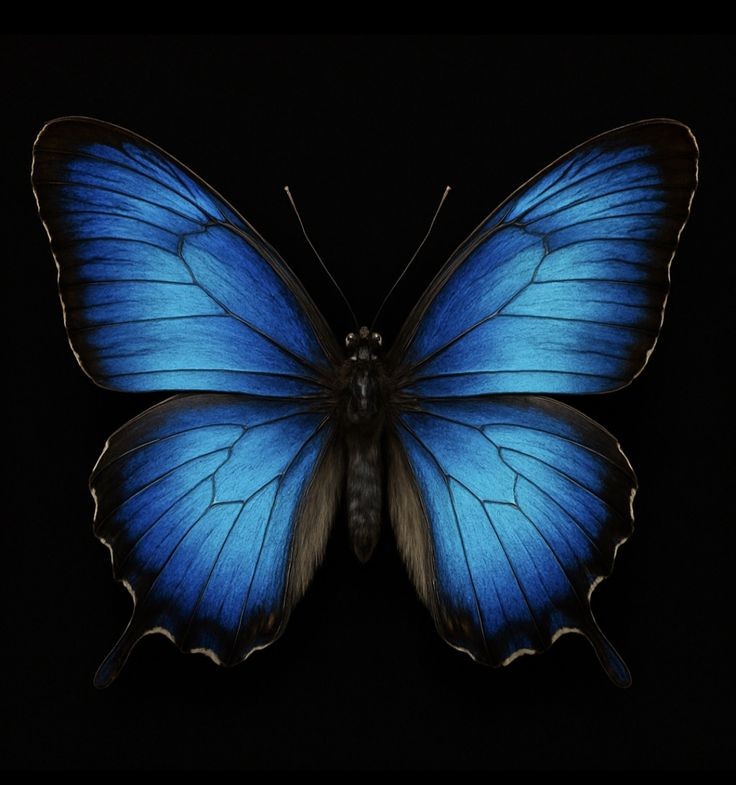
The vibrant blue color of many butterflies, is actually a trick of the light caused by microscopic scales that reflect specific wavelengths rather than actual blue pigment. These striking insects are often seen as symbols of transformation and rebirth, flitting through tropical rainforests and sunlit meadows alike.
TYPES OF BLUE BUTTERFLIES
- Blue Morpho
- Ulysses Blue
- Miami Blue
FEATURES
1.Blue Morpho
The Blue Morpho is one of the most physically impressive insects in the rainforest.
- Structural Coloration: Their wings contain no blue pigment. Instead, they are covered in microscopic, diamond-shaped scales that reflect blue light while absorbing other colors, creating a brilliant, metallic shimmer.
- "Flash and Dazzle" Defense: The top of their wings is a vivid blue, while the underside is a dull, camouflaged brown with large eyespots. When they fly, the rapid flickering between bright blue and muddy brown makes them appear to "vanish" and reappear, confusing predators.
- Unique Diet: Unlike most butterflies that drink flower nectar, Blue Morphos use their straw-like proboscis to feed on the juices of rotting fruit, fermenting tree sap, and even decomposing organic matter.
2.Ulysses Butterfly
The Ulysses butterfly (Papilio ulysses), also known as the Blue Mountain Swallowtail, is a stunning species native to the tropical rainforests of Australia, Papua New Guinea, and the Solomon Islands.
- Electric Blue Iridesence:Similar to the Blue Morpho, the Ulysses butterfly features wings that are a brilliant, electric blue. However, this color is framed by a stark black border, which makes the blue appear even more intense. This vibrant hue is also structural, meaning it's created by the way light reflects off the scales rather than by actual blue pigment.
- Swallowtail Extensions:As a member of the swallowtail family (Papilionidae), the Ulysses has distinct long tails extending from its hindwings. These tails are not just for show; they help stabilize the butterfly during its incredibly fast and erratic flight, making it one of the most agile fliers in the rainforest.
- "Blue Attraction" Behavior:These butterflies are famously attracted to the color blue. Because they use their bright color to locate mates, they will often fly down from the high rainforest canopy to investigate anything blue on the ground—including blue clothing, hats, or even blue buckets used by researchers to lure them closer for observation.
3.Miami Blue
The Miami blue butterfly (Cyclargus thomasi bethunebakeri) is one of the rarest insects in North America. Unlike its larger tropical cousins, this tiny butterfly is a specialized coastal resident of Florida.
- Miniature Size and Subtle Color:While other "blue" butterflies are famous for being giants, the Miami blue is roughly the size of a fingernail (with a wingspan of only about 2 to 3 cm).
- Males: Feature a bright, powdery metallic blue on the upper side of their wings.
- Females: Are typically darker gray with blue scaling near the body and a distinct orange-capped black eyespot on the edge of the hindwing.
- Ant-Caterpillar Symbiosis (Mutualism):The Miami blue has a fascinating survival strategy during its larval stage. The caterpillars possess specialized organs that secrete a sugary fluid (honeydew) and emit chemical signals to attract ants. In a classic "bodyguard" relationship, the ants protect the vulnerable caterpillars from spiders and other predators in exchange for the sweet snack.
- Extreme Rarity and Habitat Specialization:This butterfly is a "specialist" that lives almost exclusively in coastal scrub and tropical hardwood hammocks. It relies on very specific host plants like the gray nickerbean and blackbead. Once common across coastal Florida, it was actually feared extinct after Hurricane Andrew in 1992; today, it is critically endangered and found only in a few remote spots in the Florida Keys.
Blue butterflies are some of the most celebrated insects in the world, appearing in dozens of species across several families. While they vary in size and habitat, they share remarkable biological and physical traits.